
Silao Khaja Variants: One Sweet, Seven Versions
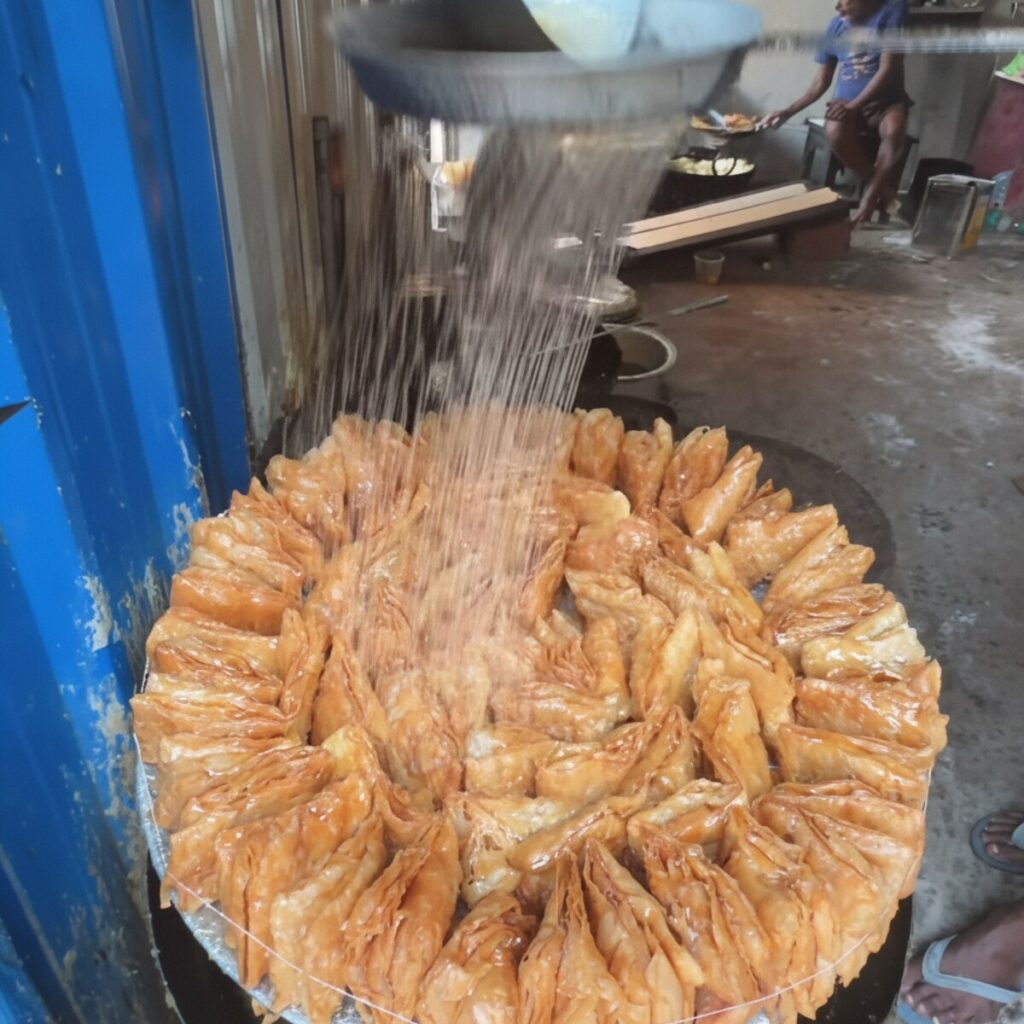
There is a stall in Silao village where the karahi has not gone cold in four generations. The oil holds at a low, patient heat — never the rolling boil a cook in a hurry would reach for — because Ramesh Sah is waiting for something specific to happen. He has folded the dough sixteen times, slipped pure desi ghee between every fold, and now he is watching those layers separate one from the next in the fat, the way pages fan open in a book left in the wind. “We have been making Silao Khaja for four generations,” he says. “The water of Silao itself is in every layer.” That single sheet of folded dough is the reason one sweet now reaches you in seven different forms.
A pastry old enough to have a folk tale
Khaja did not begin as a flavour. It began as a technique. The sweet traces to the eastern Magadh region — the old heartland that today is Bihar — and food historians push its origins as far back as the era of King Vikramaditya. One folk tale, repeated in Nalanda to this day, has the Buddha himself being offered khaja as he walked the road between Rajgir and Nalanda, the same fourteen-odd kilometres of Magadh countryside where Silao sits roughly halfway.
What sets the Silao and Rajgir khaja apart from the harder, thicker versions made in Odisha or Andhra Pradesh is the pastry itself. Here it is rolled thin and folded close, so the finished sweet shatters like baklava rather than crunching like a biscuit. The syrup it is dipped in even carries its own regional name — paga, a single-cooked sugar syrup taken to one precise viscosity and no further.
The word itself tells you what to expect. Khaja shares its root with khasta — crisp, flaky, the texture that crumbles the moment you bite. A khaja that does not shatter is not a khaja; it is a fritter that lost its nerve. That is the whole bargain the sweet makes with you, and the entire family of variants is built on protecting it.
In December 2018, the Geographical Indications Registry in Chennai made the obvious official: it granted Silao Khaja a GI tag, the legal recognition that this layered sweet belongs to this stretch of Nalanda and nowhere else. A GI tag does not protect a flavour. It protects a place, a method, and the hands that keep both alive — which is exactly why the variants below are not gimmicks but the natural offspring of one technique.
Why one khaja becomes many
To understand the variants, you have to understand the fold. Ramesh Sah and the team at Silao Khaja Bhandar — the bhandar founded by Hari Sah in 1947 — begin with a hand-kneaded refined wheat dough. Between twelve and sixteen folds, a film of desi ghee is laid down each time, so the dough is no longer one sheet but a stack of as many as sixteen distinct leaves held apart by fat. It is then deep-fried slowly in a wood-fired karahi, which is the moment those leaves bloom open, and finally dipped in the paga at its exact viscosity.
Every decision in that sequence is a fork in the road. Change the sweetener and you change the soul of the sweet without touching the fold. Change the syrup-to-dryness ratio and the same layers go from crisp to yielding. Skip the syrup entirely, salt the dough, and the pastry crosses over from mithai to namkeen while keeping the identical sixteen-layer skeleton. Roll the sheet into a spiral instead of stacking it flat, and the flake reads as a coil. The maker is not inventing seven recipes. He is running one recipe through seven small, deliberate turns — which is why the family stays honest even as the shelf grows.
This is also why Silao Khaja resists factory imitation. The water of Silao, the wood smoke in the karahi, the read of when the paga is “just one cook” and not two — none of it survives being scaled into a machine. During Chhath season the bhandar can move over three hundred boxes a day, and it still moves them folded by hand. The variants multiply the catalogue; they do not multiply the shortcut.
How to tell a real one
There is a quick test in Silao that travellers learn fast. Hold the khaja to the light and look at the cut edge: a genuine Silao piece shows a clean stack of distinct, near-translucent leaves, not a single dense slab with a few cracks. Snap it by the ear, close to your head, and a true khaja gives a dry, papery report — a sound, not a crunch. And the syrup should glaze, never gum: the paga is cooked once to a thin film that dries to a faint frost on the surface, so the layers underneath stay crisp for days rather than turning to wet cake by the next morning. Machine-made imitations fail all three, which is why they are sold cheap and eaten fast before they sag.
That same discipline is what lets the bhandar honour a real shelf life. Because the syrup is thin and the frying is slow and complete, the khaja keeps its flake well past the week most syrup-soaked sweets last — long enough to travel from a Nalanda karahi to a kitchen in Bengaluru or Delhi without arriving as a damp parcel of regret.
The seven faces of Silao Khaja
Each of these is the same GI-anchored khaja from the same Silao karahi, diverging only at the fork that gives it its name. They are gathered in our Dry Sweets shelf, all made by the same family.
- Refined-Flour Silao Khaja (500g) — the GI-tagged classic. Thin maida leaves, sugar paga, the baseline against which every other version is read.
- Meetha Khaja (500g) — soaked a little longer in the sugar syrup, so the layers turn from crisp toward soft and the sweetness sits fuller on the tongue.
- Gur Khaja (500g) — the paga cooked from jaggery instead of refined sugar, which trades brightness for the dark, mineral depth of gur.
- Gur Desi Ghee Khaja (500g) — jaggery syrup over leaves folded with pure desi ghee, the richest reading of the fold, fried and finished entirely in ghee.
- Namkeen Silao Khaja (400g) — the same sixteen layers, salted and left dry of any syrup, so the khaja becomes a savoury, tea-time flake.
- Khaja Roll (400g) — the folded sheet hand-rolled into spirals before frying, so the layers coil rather than stack.
- Silao Khaja, 500g from Nalanda — our original Silao listing, the one that started the shelf.
How to taste your way through them
If you have never eaten a Silao khaja, start with the Refined-Flour classic — it is the cleanest read of the fold, and everything else makes more sense once your teeth know what sixteen layers feel like. From there, the jaggery versions are for anyone who finds refined-sugar mithai too one-note, and the Namkeen is the one to keep by the kettle. Order direct from the Silao Khaja Bhandar through TasteLokal’s Dry Sweets shelf and it is packed and dispatched within 24 to 48 hours of the karahi — no reseller, no warehouse middle, the water of Silao still in every layer.
Research notes — sources: (1) “Khaja,” Wikipedia (origin in Magadh region, Buddha–Rajgir folk tale, baklava-like Silao/Rajgir pastry, paga syrup, December 2018 GI tag from the Chennai GI Registry); (2) Silao Khaja Bhandar maker profile, TasteLokal (Ramesh Sah, 4th generation; founded by Hari Sah, 1947; 12–16 folds with desi ghee; 16-layer flake; wood-fired karahi; single-cooked sugar syrup; 300+ boxes/day during Chhath; “the water of Silao itself is in every layer”).