Description
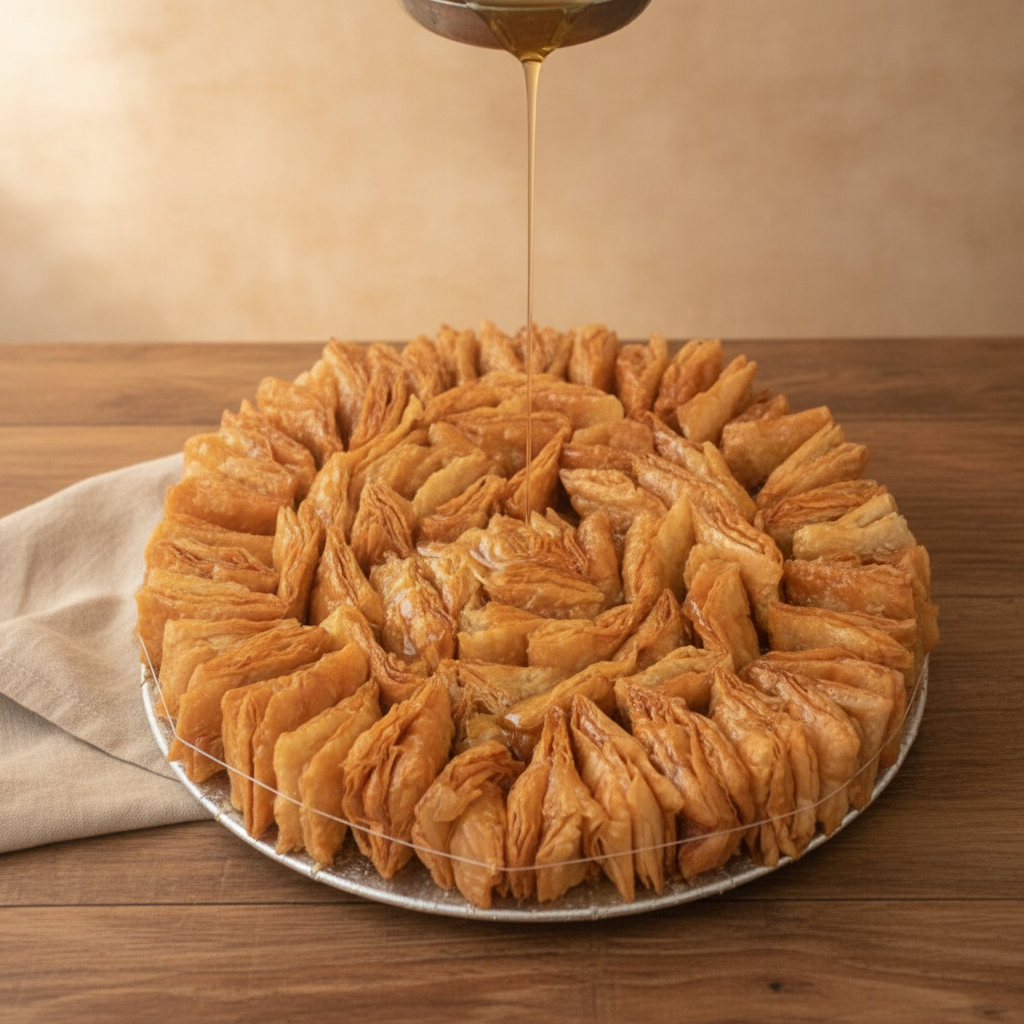
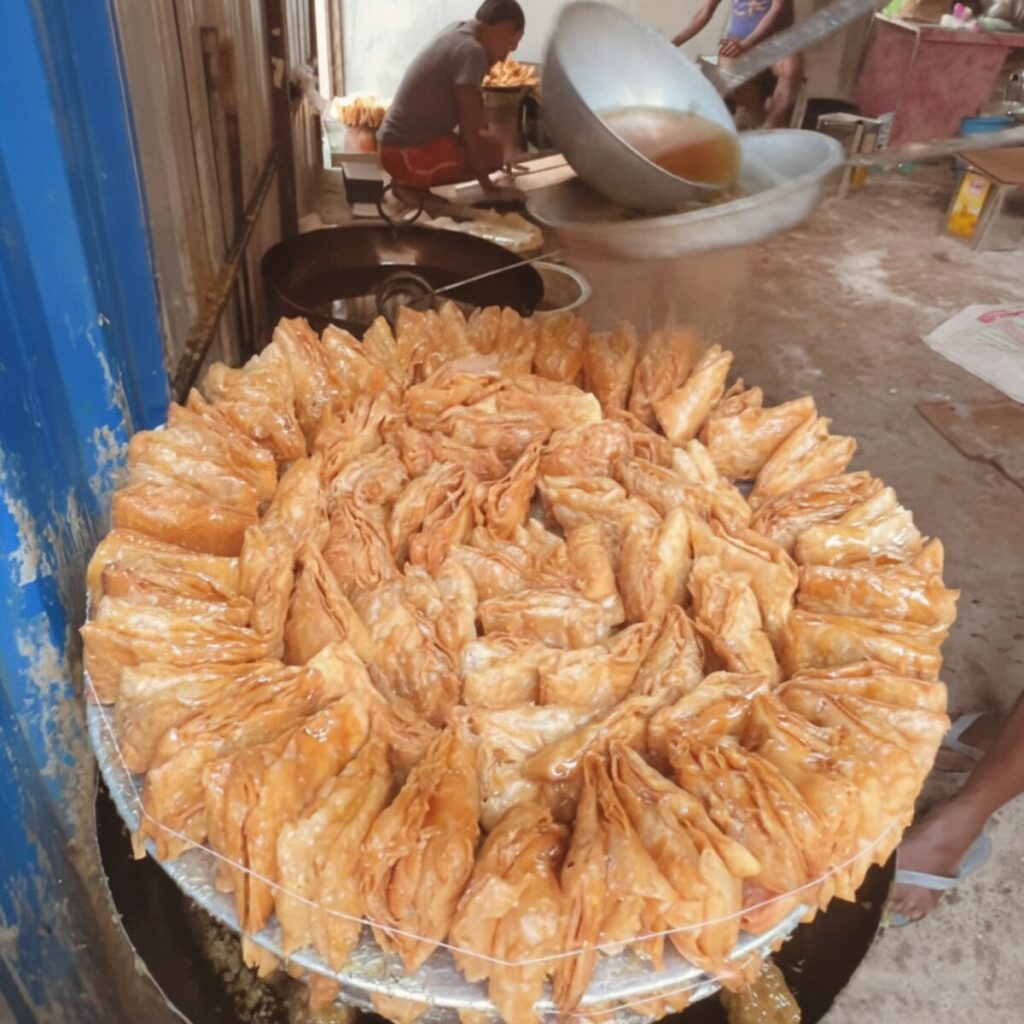
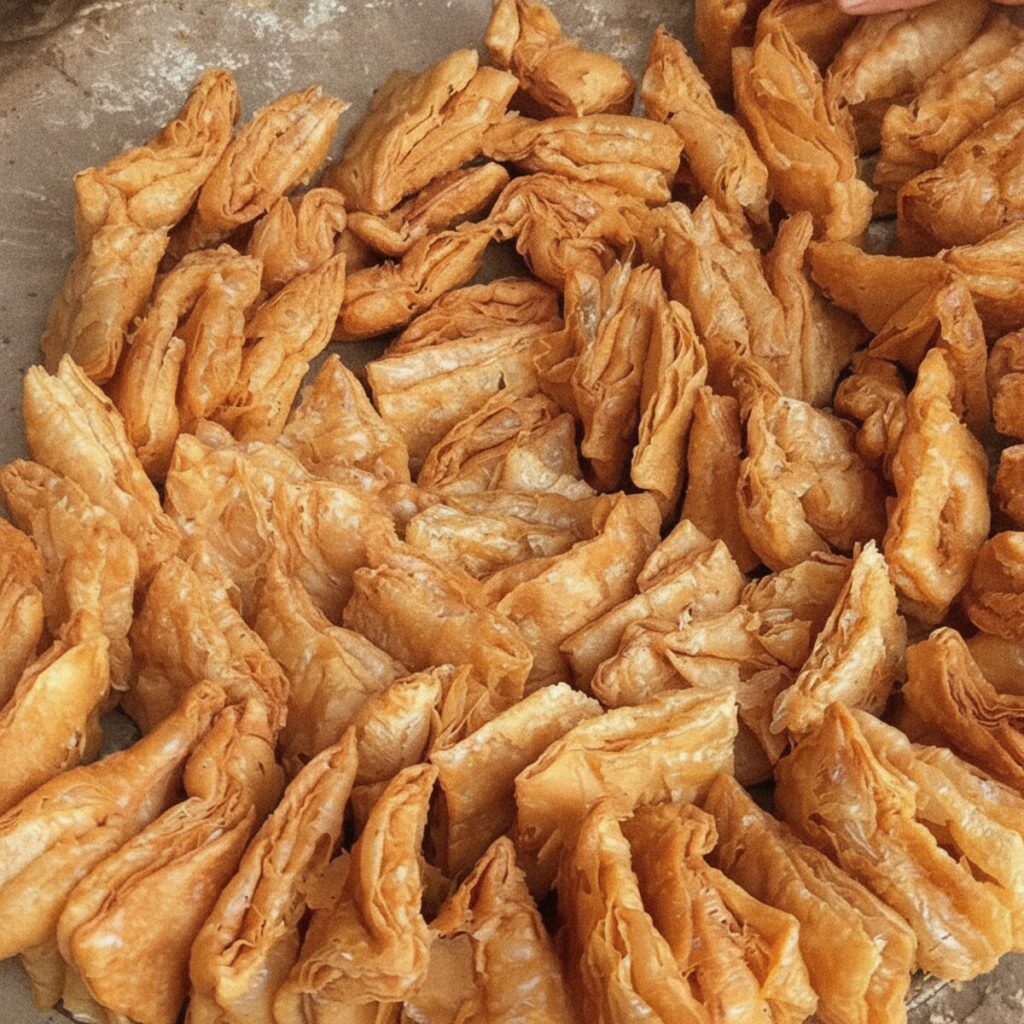
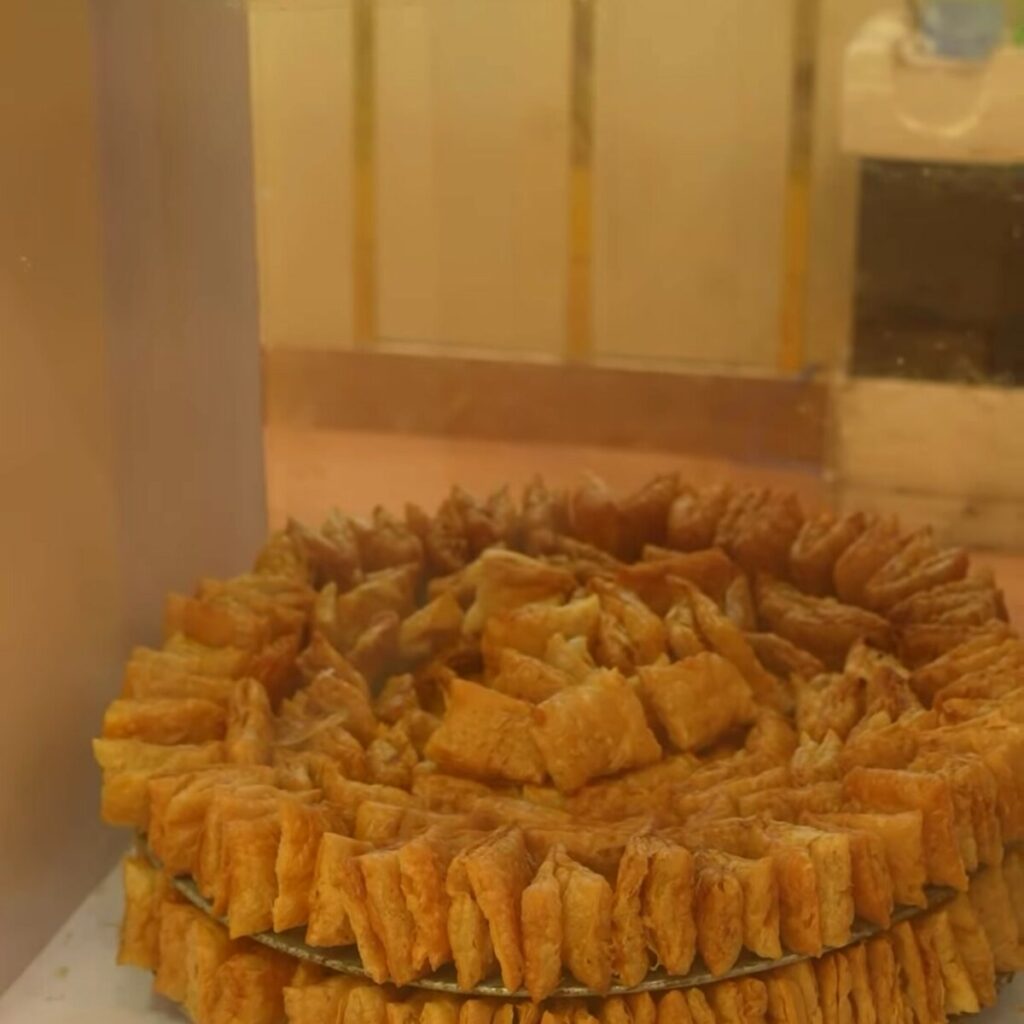
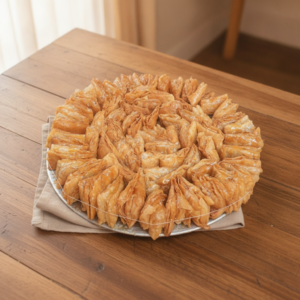
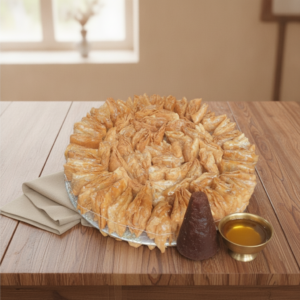
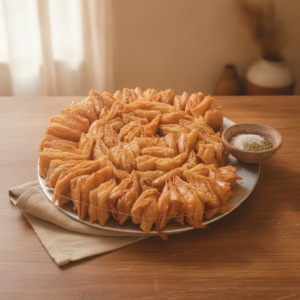
In the village of Silao, Nalanda — about 25 km from Patna — the Sah-haluwai families have folded paper-thin sheets of maida and pure desi ghee into flaky khaja for over six generations. Bite into a Meetha Khaja and the shatter is unmistakable: dozens of crisp honey-amber layers, each one bathed in the cane-sugar syrup that gives this variant its name.
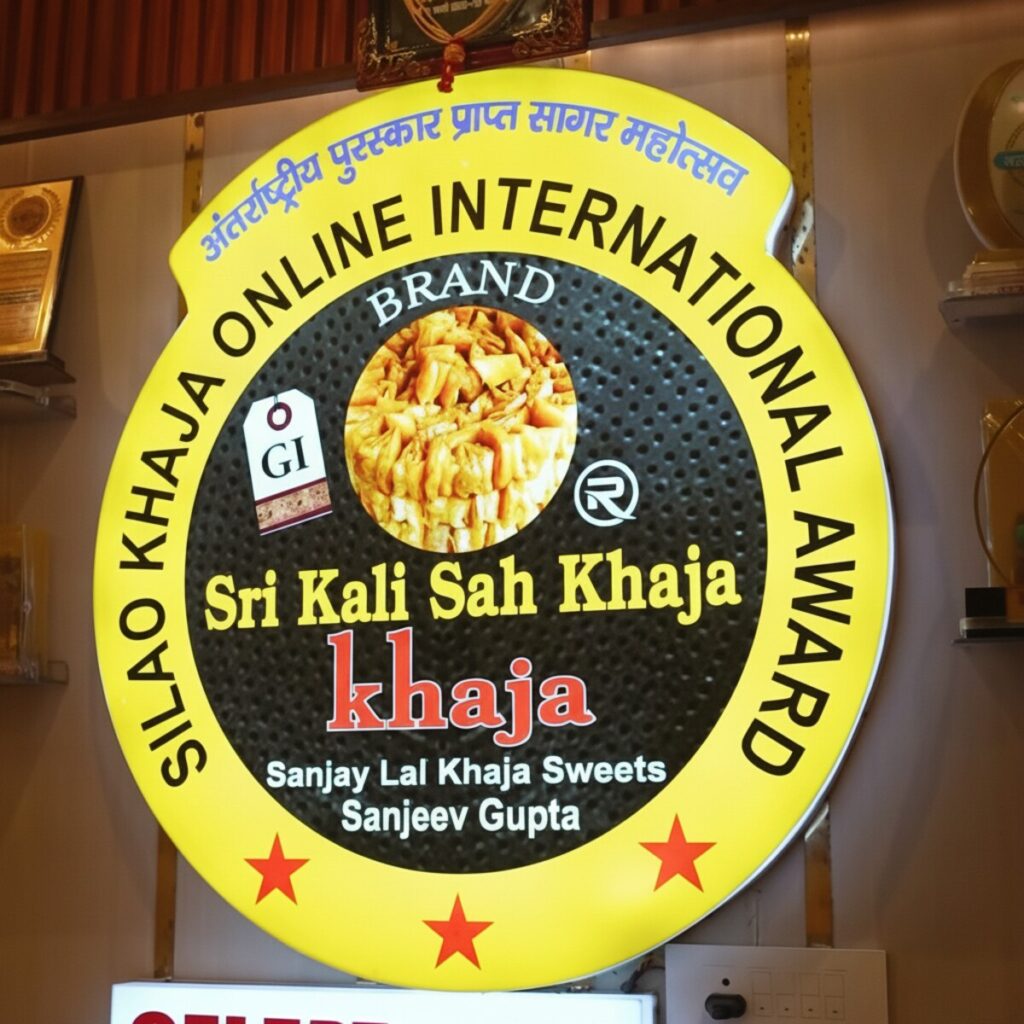
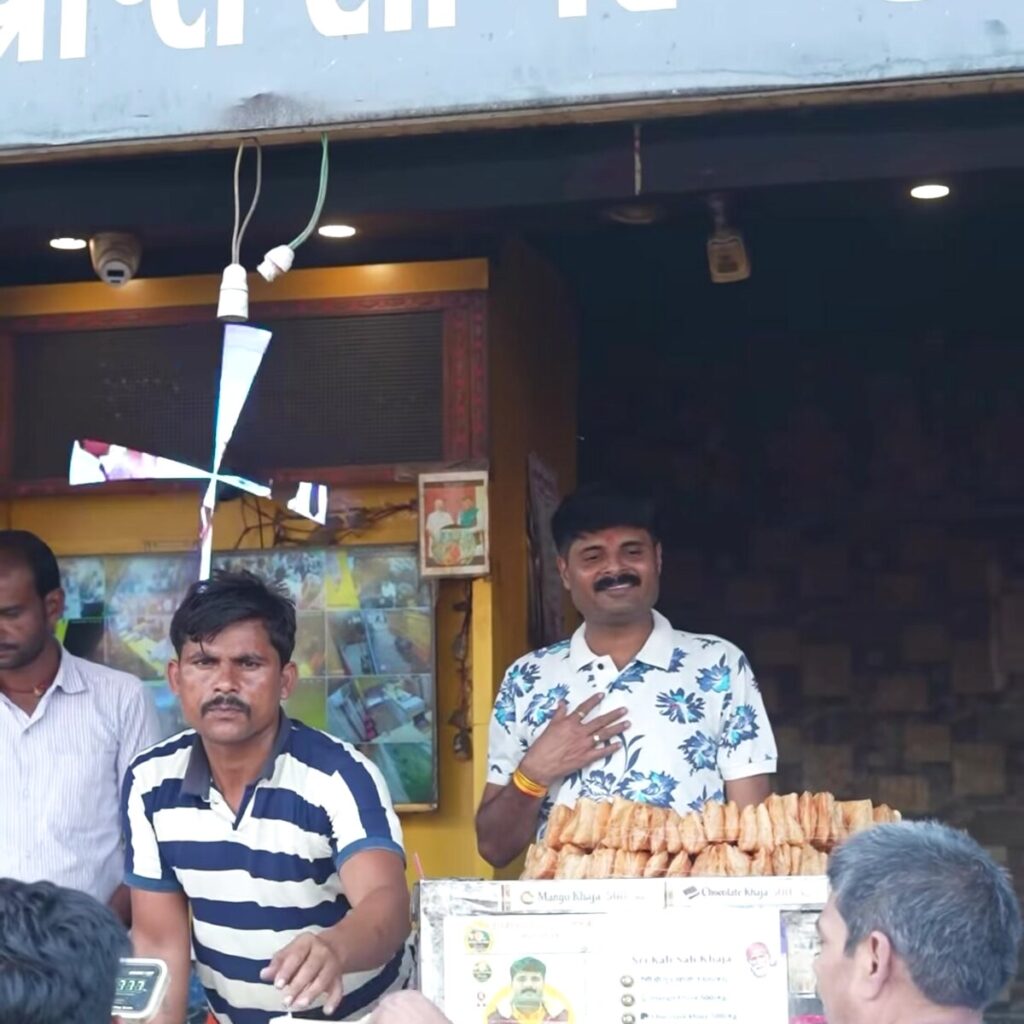
The Government of India awarded Silao Khaja its GI tag in 2018 — recognition that this is not just any Indian khaja, but a place-protected sweet whose recipe, technique, and origin cannot be replicated elsewhere. Our partner Sri Kali Sah Khaja has won the Bihar Pratibha Samman 2024 and Silao Khaja Online International Award for keeping the four-generation tradition alive.
What makes Meetha Khaja different
Unlike the plain Sada Khaja, Meetha is soaked in fragrant cane-sugar syrup right after frying — the syrup seeps into every layer, leaving a glossy honey-amber surface and a sweetness that pairs beautifully with bitter masala chai. The tapered-wedge shape is hand-formed; no two pieces are identical.
Ingredients
Refined wheat flour (maida), pure desi ghee, cane sugar, green cardamom. No preservatives, no artificial colors, no palm oil. Made in small batches and packed within 24 hours of frying.
How to enjoy
Pair with masala chai in a terracotta kulhad, kulhad doodh, or sweetened lassi. Traditional Bihari wedding sweet — your gift box arrives sealed with the GI Tag stamp.
Storage
Airtight container at room temperature. 30 days from manufacture. Do not refrigerate — moisture softens the layers.
Net weight: 500g · ~12–15 pieces · Direct from Silao, Nalanda
Frequently asked
- How is Meetha Khaja different from Sada (plain) Khaja?
- Meetha is soaked in cane-sugar syrup after frying, giving a glossy honey-amber finish and noticeable sweetness. Sada is dry-finished, pale wheat-gold, and savoury-leaning. Same layered base, different final character.
- How long does Meetha Khaja stay crisp?
- 30 days from manufacture when stored airtight at room temperature. The syrup coating slowly softens after that, but flavour holds for up to 45 days. Do not refrigerate.
- Is this really GI-tagged?
- Yes. The Government of India granted Silao Khaja its GI tag in December 2018. The certification is on display at our maker’s shop in Silao. Each gift box carries the GI Tag wax seal.
- Can I gift Meetha Khaja to family in another city?
- Yes. We ship pan-India in tamper-proof food-grade tins. Standard delivery 3–7 days. Each box is sealed in Silao within 24 hours of packing.
- What pairs best with Meetha Khaja?
- Masala chai in a terracotta kulhad is the classic. Also pairs with kulhad doodh, sweetened lassi, or as part of a Bihari thali for festivals like Chhath, Holi, and weddings.
Why this price
MRP ₹1,099 · You pay ₹849 · Save ₹250 (23% off)
Each 500g box yields 12–15 hand-folded pieces — that is roughly ₹60 per piece for a sweet that takes the Sah-haluwai family two days to make (kneading the maida, layering with desi ghee, double-frying, syrup-soaking). Compare to mass-produced khaja at ₹250–₹350/kg from supermarket aisles — there is no comparison in layer count, ghee content, or freshness.
This is a premium GI-tagged heritage sweet, priced to reflect the four-generation craft, the GI registry protection, and direct-from-Silao supply with no middleman markups.
The Silao water + climate story (why only Silao)
The reason Silao Khaja cannot be replicated outside Silao is local water and the village climate. The Sah-haluwai families say the limestone-rich groundwater of the area gives the maida dough its specific elasticity — letting them roll out 12 to 16 paper-thin sheets per khaja and have them shatter, not crumble, when fried. Texture-wise, the result is closest to a Turkish baklava cross-section, but with a distinctly Indian desi-ghee aroma.
Festival significance — Chhath, Diwali, Dussehra
In Bihar, Silao Khaja is the festival sweet. It is offered to Surya Devata (the Sun God) during Chhath Puja as prasad, gifted to extended family at Diwali, and shared at Dussehra and Bihari weddings. The tradition dates to the Mauryan era — Silao village sits just south of Nalanda, the seat of the ancient Buddhist university, and food historians trace khaja-making in this region back over 2,000 years.
Also known as
Silao ka khaja · सिलाव का खाजा · Meetha khaja · Silao mithai · Refined silao khaja · Layered khaja · Bihari khaja sweet · Nalanda khaja · GI khaja Bihar
From the makers
Silao Khaja Bhandar — Sah-haluwai families, Silao village, Nalanda district. Four generations of layered-pastry craft since 1947. Each piece is hand-folded with maida and ghee into dozens of paper-thin sheets, pressed into blocks, and slow-fried until it shatters at the first bite. GI-tagged 2018. We buy directly from their original shop on the Rajgir road.