Description
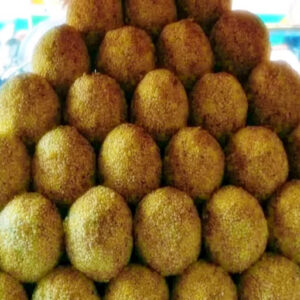
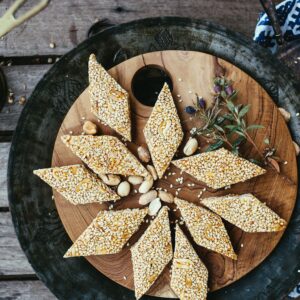
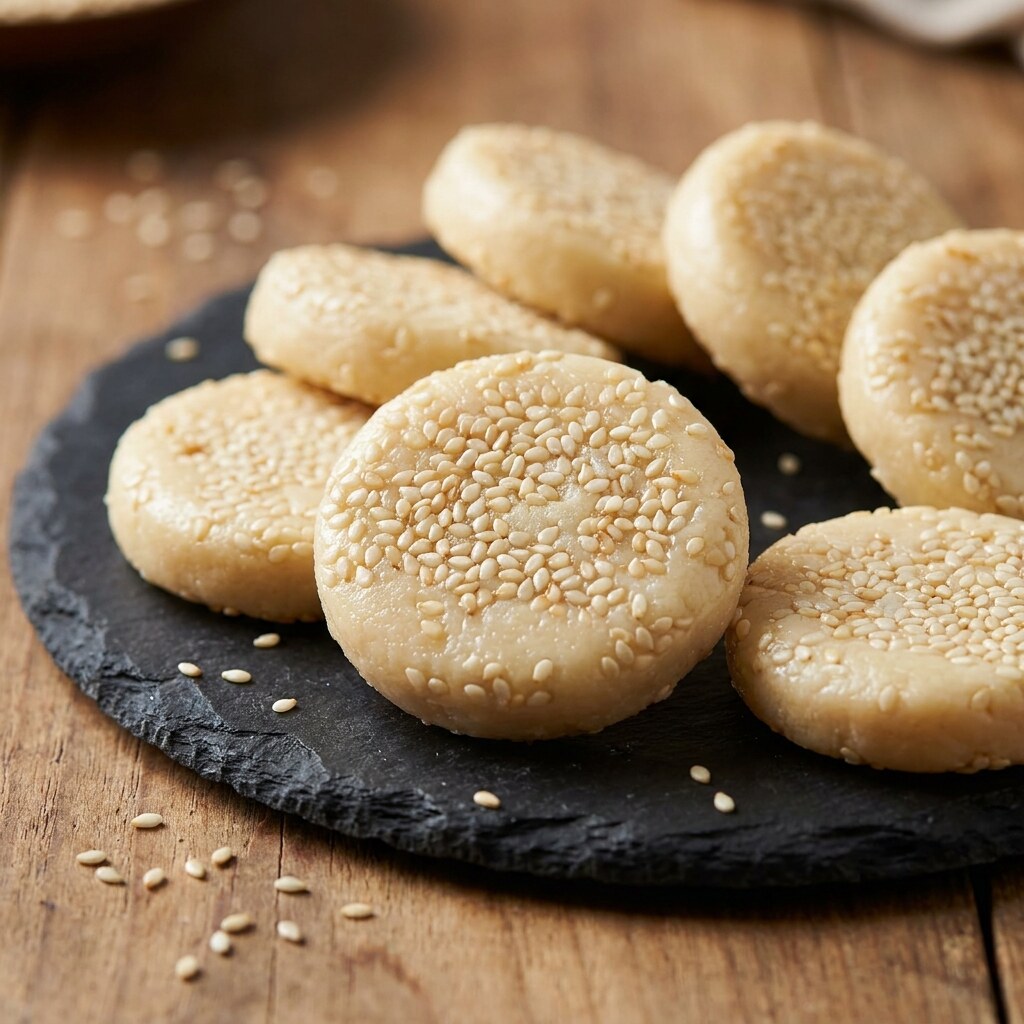
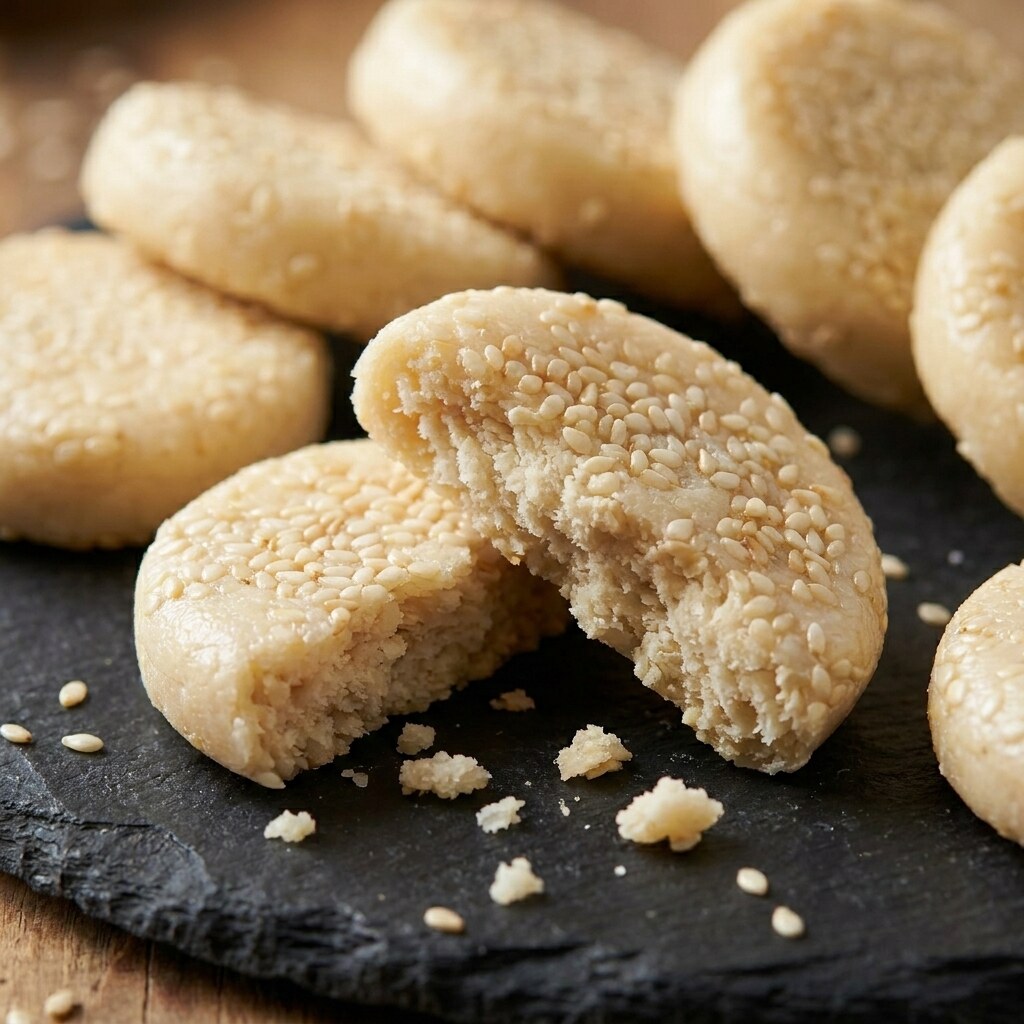
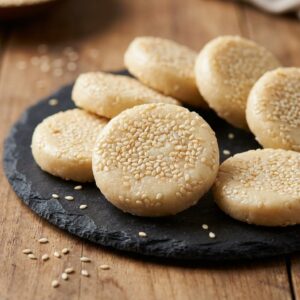
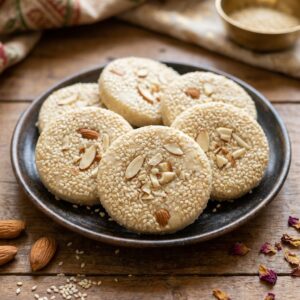
Khoya tilkut is the indulgent cousin in Gaya’s tilkut family — the one halwais make for those who find the classic disc too austere. Here the roasted sesame and sugar are worked together with khoya (mawa), milk slowly reduced over a low flame until it thickens to a soft solid. The khoya softens the whole sweet: instead of the dry shatter of chini tilkut, a khoya disc yields with a tender, fudge-like bite while keeping the deep toasted-sesame flavour Gaya is known for.
Tilkut has been pounded by hand in Gaya’s Ramna and Tekari lanes for roughly 150 years, made densest in the winter months. The khoya variant is the most labour-intensive of the family — the milk must be reduced fresh, then folded in while the sesame is still warm so it binds without splitting. Because it carries dairy, it is made in smaller batches and eaten sooner than the plain versions.
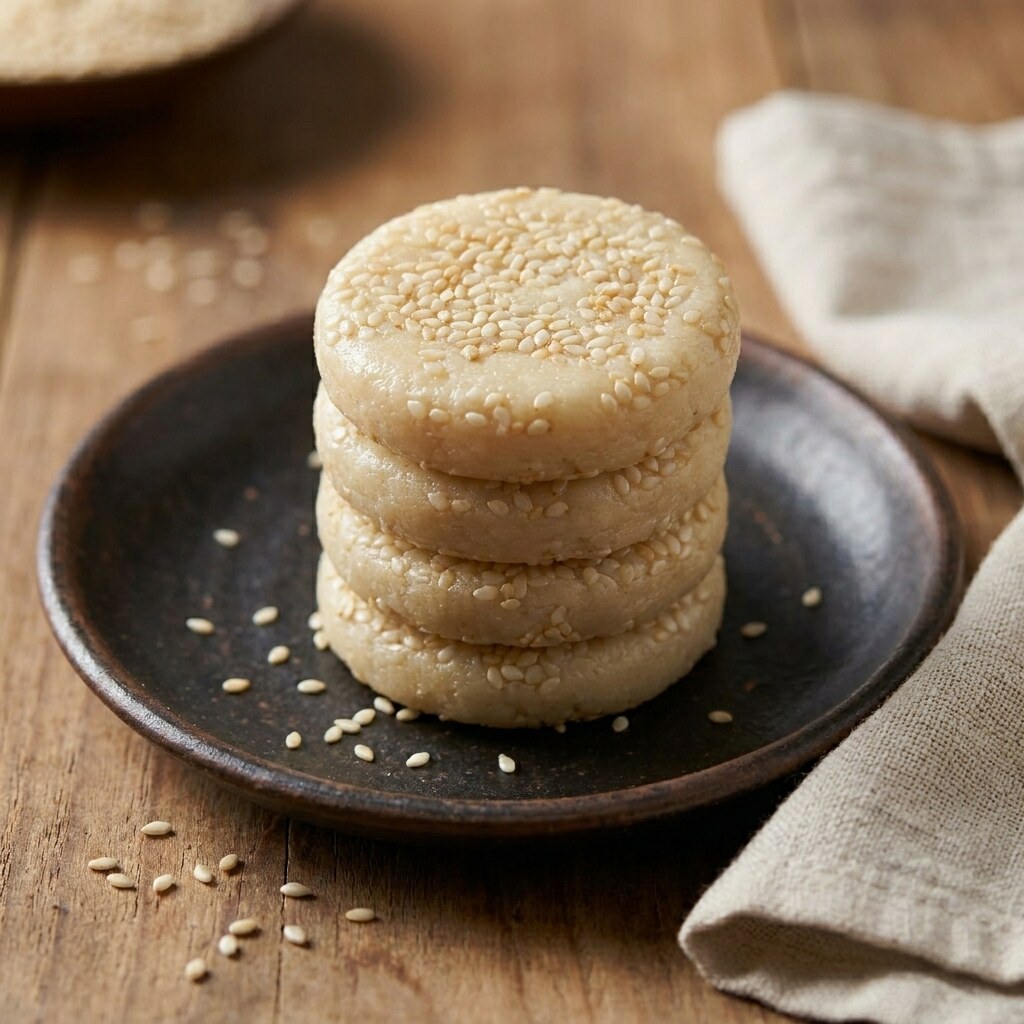
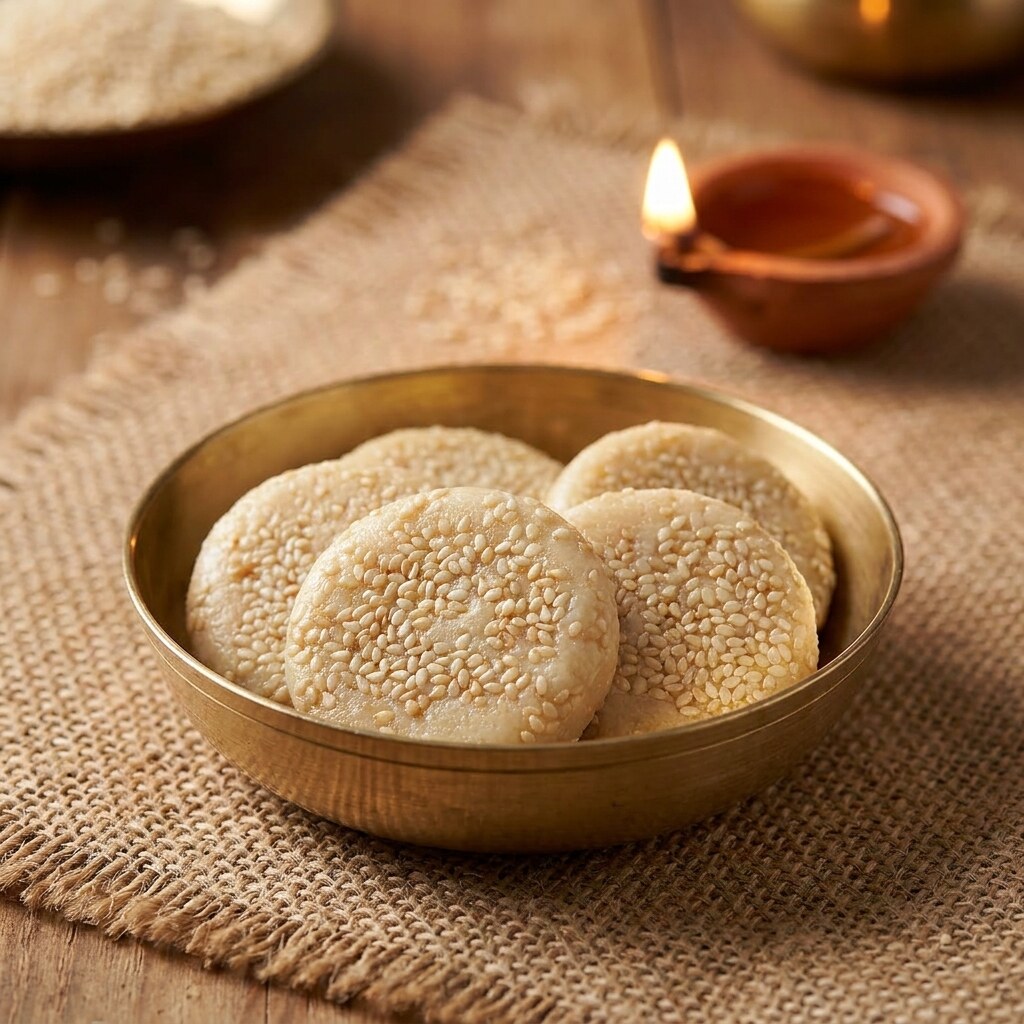
The result is ivory-cream in colour, soft at the centre, still jacketed in toasted til. It is a sweet for the festive table — Makar Sankranti, winter weddings, a visit that deserves the good tin.
Enjoy it within a few weeks of opening, and keep it refrigerated in an airtight box once the tin is broken, since the khoya prefers the cold. Unopened and stored cool, it holds for up to 20 days — shorter than dry tilkut, which is the honest cost of real milk solids and no preservatives.
350g. Small-batch Gaya khoya tilkut: roasted sesame, sugar and fresh-reduced khoya only.
From the makers
Sri Ram Tilkut Bhandar — Ramna Road, Gaya. Hand-pounding sesame and jaggery in stone mortars since 1911, four generations later still doing it the same way. No machine grinding, no fillers, no shortcuts. Gaya tilkut earned its Geographical Indication tag in 2023, formally recognising the town as its rightful home. We source directly from the original Sri Ram Tilkut Bhandar shop on Ramna Road — the same stall their grandfather opened a century ago.